by Shelley Byrnes, in collaboration with Lynn Hartmann
When I was young, church was different. The boys were acolytes and the girls did junior altar guild. It was a rule.
In the 70s when the Episcopal Church was struggling with the idea of ordaining women, I heard folks say that if Jesus had wanted women to be leaders in the church He would have had women apostles.
As a teenager, at church camp, I loved singing “I am the Bread of Life.” It was beautiful and emotional and I felt God in my soul when it was enfolded in music and voices singing, “And I will raise him up on the last day!” But it was “He” who would not hunger and “Him” who would be raised up.
I went through a stage of not even being sure I was Christian because I didn’t want to be associated with those who claimed to love Jesus but spouted hate. I distanced myself from Jesus and really started clinging to the feminine part of God.
It took a long time for me to realize that as my faith grows, my theology grows too. The God I have experienced in my life is different from the God I was taught about while growing up.
So I started doing more reading and studying. The Bible verse that truly started me on my journey away from my embedded theology was Genesis 1:27: So God created humankind in God’s own image, in the image of God he created them. If God created all of us in God’s image, then, if we diminish anyone (because of gender identity, race, ability, economic status, sexual identity, age, immigration status, religion) we miss out on knowing that part of God! And I think we also miss out on finding that part of God within ourselves.
I read about Johanna, Susanna, Joses, Mary and Martha. There WERE female apostles! And once I got rid of the embedded theology that Mary Magdalene was a sex worker, I realized that she was actually the very first evangelist. She was the one that Jesus sent to the apostles to tell them he had risen. NOT Peter—Mary Magdalene.
In most languages, the Holy Spirit is feminine. She is the comforter. She is the one to hold our hands and guide us after Jesus left the earth. She is Wisdom.
What does the term “Divine Feminine” mean? Another name is “Wisdom”. Here is a description from the book of Job:
Where is Wisdom found?
Where is the source of understanding?
You cannot set a price on Her;
She is not bought, sold, or bartered for.
The deep says, “She is not in me”;
The sea says, “I do not possess Her.”
She cannot be traded for gold,
Nor swapped for silver.
The purest gold cannot secure Her.
Neither can precious onyx or sapphire . . .
A pouch of Wisdom is better than a sack of rubies. (Job 28:12-19)
The Hebrew scholar, Rabbi Rami Shapiro, explains this text:
“Wisdom isn’t anywhere. She is everywhere. She cannot be found because She cannot be lost. She is not one thing, but the Way of all things. Just as you cannot separate the ocean from its current . . . the wood from its grain, so you cannot separate Wisdom from the world.
Wisdom is not a thing to be found, but a Way to be lived. . . . Wisdom is free. She is with you already. There is no one to be and nowhere to go other than who you are and where you are right at this very moment. Simply silence the noise of self and hear Her calling to you.” The Divine Feminine in Biblical Wisdom Literature, Rabbi Rami Shapiro, p 56
To clarify: the term “Divine Feminine” does not convey that this wisdom is limited to women. As Rabbi Shapiro explains it, “I do not believe that God is literally male or that [Wisdom] is literally female. We are not dealing with biologic facts but with theological archetypes residing within each of us. What is needed is the marriage of the two within the individual.”
I came back to loving Jesus but I never gave up my connection to the breath of the divine feminine.
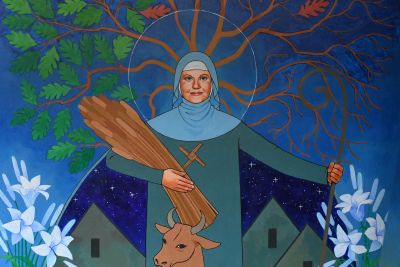
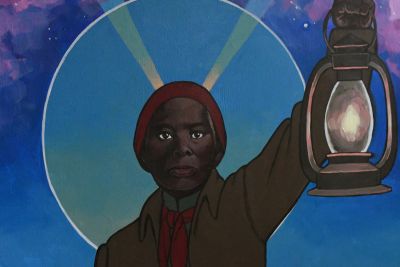
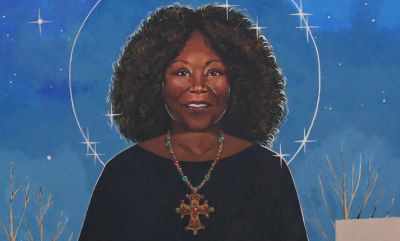
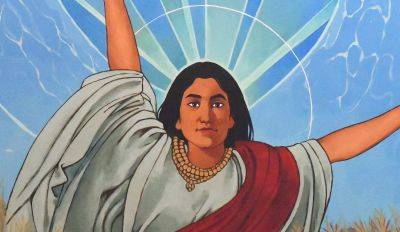
Earlier this year, the St. John’s Women’s Group, Liturgy Committee and our clergy collaborated to create a 5-week program during Lent 2026 entitled “Revealing the Divine Feminine.” They chose to feature five women of history who have helped to move humankind from darkness into light: Ruby Bridges, the prophet Miriam, St. Brigid of Kildare, Dorothy Day, and Harriet Tubman. During the series, sermons and educational forums were centered on the lives and work of these five women and how they embodied divine energy.
At the same time, St. John’s Children, Youth, and Family ministry was planning for Lent, too. We had been selected to be part of the 2025-2026 cohort for Phillips Theological Seminary’s Worshipping with Children: Imaging and Imagining God program, funded by the Lilly Endowment’s Nurturing Children Through Worship and Prayer Initiative. This program is focused on cultivating sacred spaces through which children will come to know and love God and grow in their faith. We wanted a way to use art to connect our smallest parishioners with the themes and liturgies of Lent.
With this in mind, the Imaging and Imagining creative team coordinated with the Women’s Group to create a physical art installation that coordinated with the “Revealing the Divine Feminine” series. Thanks to the grant, we were able to commission portraits of the five women, done by Chris Sanders, a talented artist and parishioner here at St. John’s.
During the early stages of planning, Chris found medieval images of St. Brigid centered with smaller figures and representative objects surrounding her and sometimes protected by her. This was the model that inspired the layouts for all of the paintings. Because the focus of our grant was to engage children, the sizing of the each of painting’s subject is set so that they look children in the eyes.
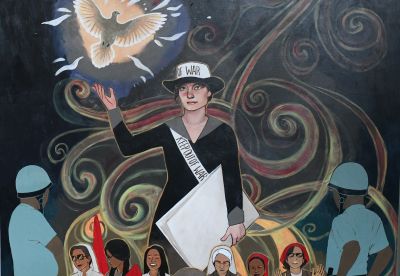
Now that Lent is over, these paintings will have a permanent place in our Parish Hall! Adding this installation as a permanent exhibit will add important context and counterbalance to the sacred art throughout our building. The stained glass art in our sanctuary is gorgeous, but mainly depicts women only as mothers or those in need of healing. The portraits of “Revealing the Divine Feminine” show women as leaders spiritually and socially, in many times and places. It is a strong statement that we at St. John the Evangelist strive for justice and peace among all people, and respect the dignity of every human being.
I hope folks of all ages and genders will come to our Art Openings celebrating this installation. We’ll be gathering Sunday, August 23 at 4pm and Sunday, August 30 at 11:30am. Both receptions will include food and celebratory drinks as well as art supplies for those who are inspired to make their own versions of the divine feminine. They will also offer a chance to chat with Chris about their process as an artist, and the meaningful symbolism and inspirations present in each portrait.