
by Keith Davis
The Gary, Indiana of August 2026 is not the Gary, Indiana of my youth. The town where I grew up is certainly not the town severely ravaged by an August 11th Derecho wind event that left massive destruction and a city without power for two weeks. However, the thread connecting the Gary of memory with its current iteration is that of a resilient community overcoming life’s adversities, whether natural or human-made. People and institutional traditions assisting those in need, even when their own needs beckon. This city and its people epitomize the title of Dr. Maya Angelou’s poem: AND STILL I RISE.
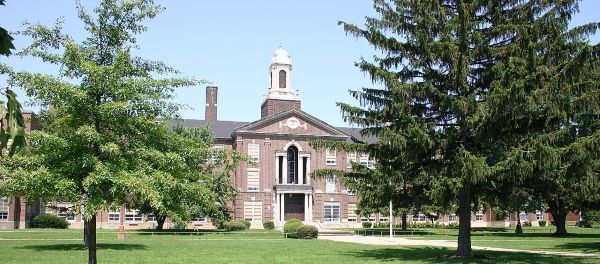
I was born, nurtured, and educated in and by Gary. I am a product of one its most tradition-rich institutions, Roosevelt High School, as were my mother, stepfather, aunts, great uncles and great aunts, and several cousins. Roosevelt was one of three high schools in segregated Indiana built specifically for Black students.
Israel Christian Methodist Episcopal Church, the church of my youth, spiritually grounded me and helped develop my leadership and public speaking skills. Here I became aware of Jesus’ life and legacy. I was active in the church youth group and, as a high school senior, became its president. I believe Israel is where I was first “volun-told.” I delivered my first public speech here at age 6, though I don’t recall my mother asking if I was interested in doing so.
I could go on about these and other Gary institutions. Doing so, however, would be a disservice to the true core of the city: its people.
Historically, most of Gary’s Black population came as part of the Great Migration, the movement of Blacks from the south to the north in search of better jobs and treatment. My families were part of that movement. Being segregated, the majority of Blacks lived on the city’s east side. There, grocery stores, barbershops and salons, churches, funeral homes, a bank, and other community touchstones were created and thrived. Relationships formed. Bonds were forged. Reliance on one another was essential. It was a matter of survival, as it is in most immigrant communities.
Any realistic remembrance cannot be seen through rose-tinted glasses. From the mid 1960s White flight, to the 1970s industrial and population decline, and 1980-90s rise in crime, Gary, once the financial engine of NW Indiana and major tax generator for the state, had become a distressed shadow of its former self. A population of nearly 175,000 has dwindled to a tick over 68,000. These residents continue to overcome and rise above hardship.
As Episcopalians, one of our Marks of Mission is “To respond to human need by loving service.” Our Gary neighbors, though recovering, are still in need of food, medication, clothing, building materials, and other essentials. So, this Sunday, October 4, we will take up a special Mustard Seed offering to benefit The Greater Gary Storm Recovery and Relief Fund. You can donate on Sunday using the envelopes in the pews or donate online here right now (choose “Mustard Seed” fund). Please consider giving to this worthy cause. A financial donation by the St. John’s community will be a loving way to respond to this human need.
Give what you can. Love how you can. Forgive as you can. God will take whatever you offer and multiply it.
James Martin, SJ