
July is Disability Pride Month, and throughout the month we are offering a series of weekly articles written by parishioners who experience disabilities, both visible and invisible, and by family members of those with disabilities. In these reflections, they will share how disabilities intersect with their faith and participation in the church community.
by the Rev. Ernie Ashcroft
There are many types of disabilities: physical, emotional, intellectual, and spiritual. Here I will focus on physical and emotional disabilities since I am most personally familiar with these.
When I was two years old, I contracted polio. This was before a vaccine was available. The only treatment was isolation, to prevent the spread of the disease. I spent 15 weeks in an isolation hospital. My first memory is of seeing my mother looking at me through a window.
In infants and children, the polio virus attacks cells in the spinal cord known as the Anterior Horn cells. Destruction of these cells may result in paralysis of the child’s limbs. In my case I had a mild case of polio, only resulting in paralysis of my left leg from the knee down. Many of my friends who also had polio had more severe damage, often to both legs and in some cases arms also.
Initially, walking was difficult for me, and could only be accomplished by the wearing a heavy, cumbersome iron caliper. This, however, was an improvement over my doctor’s initial assessment that I would never be able to walk again. Not surprisingly, my character has been shaped by my disability. I refused to accept that my present walking ability was the best that I could hope for and pushed to improve it. By the time I was four I was able to walk without using the caliper. My walking was not elegant—my left foot was permanently turned out and I walked entirely on my toes. Beginning when I was five, I underwent a series of orthopedic surgeries which, by the time I was 13, meant I had almost normal leg and foot function. My ability to run was limited and I was never able to ski or skate, but in high school I was able to play competitive rugby, cricket, and tennis.
Now this may seem like a fairy story where everyone lives happily ever after. But there is more to my story. In my lates fifties, because of insights I had gained through spiritual direction, I embarked upon a course of psychotherapy. I was driven to this because I had become aware that my decisions were not always the result of my rational choices, but behind the scenes, emotional factors were “pulling the strings” of which I was only dimly aware. I learned a lot about myself through the psychotherapy sessions and gained both significant insights and understanding of how I functioned.
The key discovery in relationship to my having had polio was to understand that my response as an infant to the trauma of being separated from my mother for 15 weeks was to determine that I would never again allow my self to become vulnerable to deep, emotional trauma. So for many years I had organized my actions and relationships to protect myself from emotional trauma. This meant that I had accepted emotional disability as the price for safety. During my psychotherapy, I choose to explore the emotional side of my life. It was not an easy or a comfortable process, but the wholeness and healing that this brought was deeply satisfying. The way I expressed this to my therapist was to say to her, “up to now I have been living life in black and white and now I am beginning to live life in color.”
Now to return to the physical impact of polio. Many years after the onset of polio, most folks who had contracted the disease develop Post Polio Syndrome. This condition is not infectious; rather, doctors suspect that the nerve cells that had been weakened and damaged by the initial infection become less functional with age. This leads to fatigue, muscle weakness ,and aches and pains. There is no cure and it appears to be progressive in nature.
In my case, I did not experience any symptoms until I was in my late seventies—more than seventy years after contracting polio. I now use a walking cane, because steps are a challenge and I have no desire to fall. I also have limited energy, necessitating frequent rests, and I experience random aches and pains.
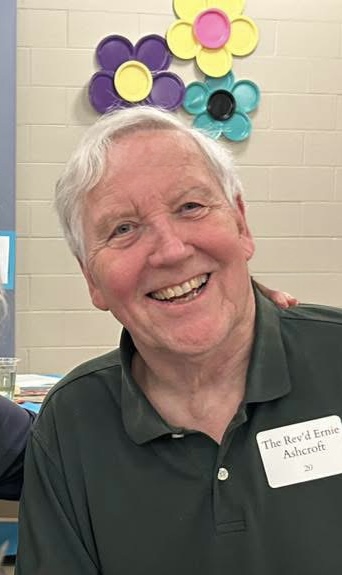
We all have some type of disability, whether physical, emotional, mental, or spiritual. I am reminded of the banner in the office of the Dean of Students in my university. It proclaimed “It is no use complaining or crying—things are what they are.” No one chooses a disability; all we can do is to accept that this is the case and deal with life as best we can. Choosing denial as our response, while attractive, is not wise, since failure to address the issue will negatively impact the quality of our future life.
One of my grandchildren was diagnosed early in his life on the autistic spectrum. As soon as his parents became aware of this, they opted for intensive therapy and comprehensive treatment. This resulted today in significant improvement of his social and communication skills. Facing into our disability, while likely to be challenging, costly, and even painful, often results in healing and transformation.
For me, being in a community has helped me throughout this journey. Support, acceptance, love, and being fully known, within the context of a worshipping community, has been invaluable.